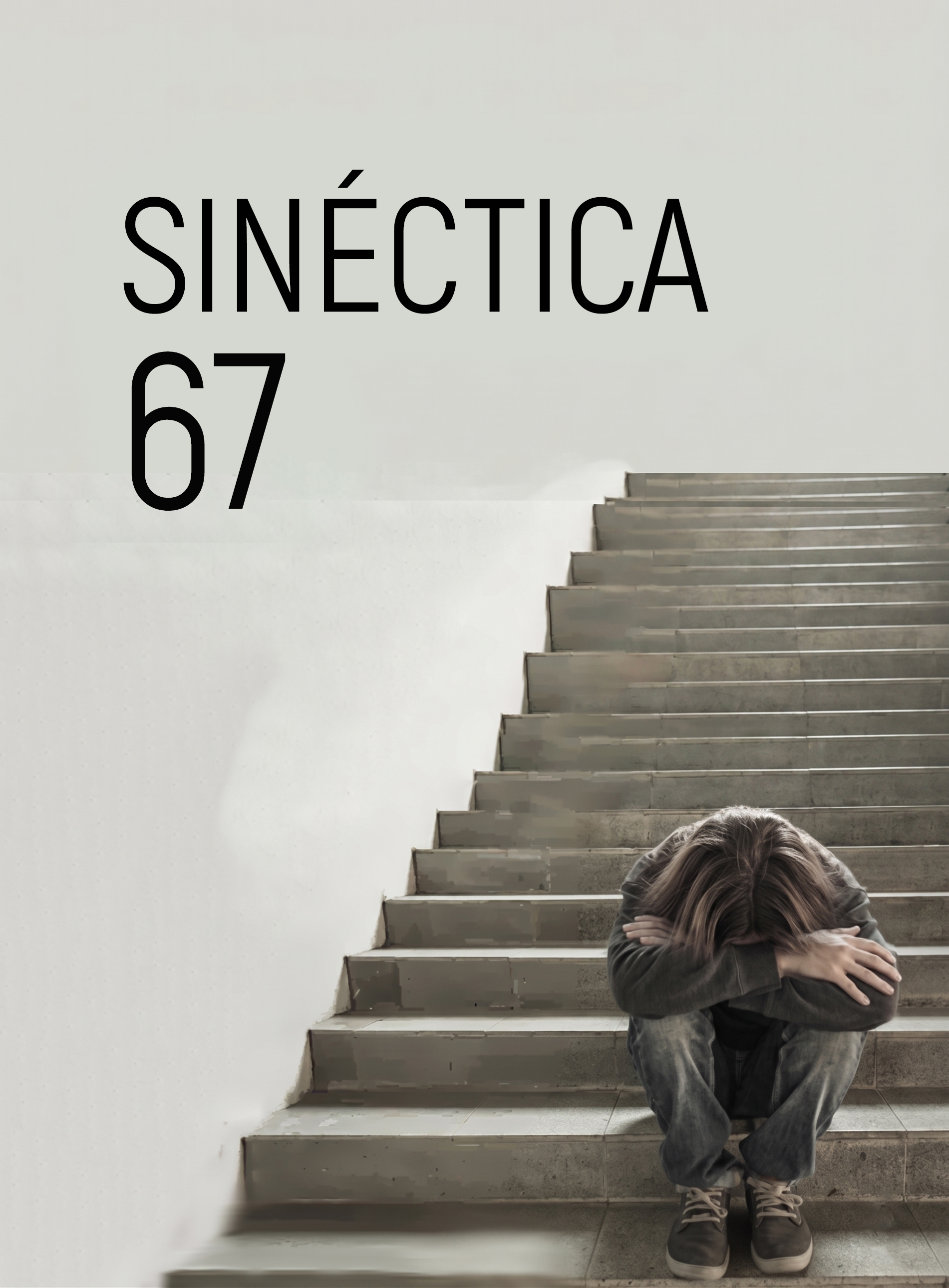
Subjective theories of leaders of parents' and guardians' centers on coexistence and school violence in Chile
DOI:
https://doi.org/10.31391/ITER7834Keywords:
school violence, school coexistence, parents’ associations, subjective theoriesAbstract
School violence is a significant concern in Chile, particularly in socially vulnerable communities. However, research has paid limited attention to families’ perspectives on this issue. This study aims to reconstruct the subjective theories of leaders of parent and guardian associations concerning school climate and school violence in public and government-subsidized schools in Chile’s Metropolitan Region. Using a qualitative, exploratory, descriptive, and interpretive approach, five semi-structured interviews were conducted. The findings show that participants attribute school violence to authoritarian or neglectful parenting practices, a lack of emotional support, and the intergenerational transmission of violence, as well as shortcomings in school management and the influence of social and media environments. They understand school climate as a relational process grounded in collaboration, mutual respect, and communication among members of the school community. They propose strategies involving collaborative conflict resolution, active listening, student motivation, and ongoing values education within families. The study contributes to understanding the perspectives of individuals who represent families in school communities and highlights the potential role of parent and guardian associations in strengthening positive school relationships and preventing violence.
Downloads
References
Aguilar, C. B. y Chiarino, N. (2025). Intervenciones psicoeducativas para la prevención del acoso escolar: una revisión sistemática general entre 2019-2023. Páginas de Educación, vol. 18, núm. 2. https://doi.org/10.22235/pe.v18i2.4541
Al Mazrooei, A. K., Hatem Almaki, S., Gunda, M., Alnoor, A. y Manji Sulaiman, S. (2022). A systematic review of K–12 education responses to emergency remote teaching during the COVID-19 pandemic. International Review of Education, vol. 68, núm. 6, pp. 811-841. https://doi.org/10.1007/s11159-023-09986-w
Alcántara, I. M. B., Huaman, D. I. C., Yerren, M. V. y Ancajima, A. A. B. (2025). Factores de la violencia escolar: una revisión sistemática de literatura. Prohominum, vol. 7, núm. 3, pp. 324-343. https://doi.org/10.47606/ACVEN/PH0373
Álvarez, C. Á. y Bilbao, E. S. P. (2023). Asociaciones de familiares en centros públicos de educación secundaria. Contextos Educativos: Revista de Educación, núm. 32, pp. 325-346.
Andrades-Moya, J. (2020). Convivencia escolar en Latinoamérica: una revisión bibliográfica. Revista Electrónica Educare, vol. 24, núm. 2, pp. 1-23. https://doi.org/10.15359/ree.24-2.17
Ascorra, P., López, V., Carrasco, C., Pizarro, I., Cuadros, O y Núñez, C. (2018). Significados atribuidos a la convivencia escolar por equipos directivos, docentes y otros profesionales de escuelas chilenas. Psykhe, vol. 27, núm. 1, pp. 1-12. https://doi.org/10.7764/psykhe.27.1.1214
Astor, R. y Benbenishty, R. (2019). Bullying, school violence, and climate in evolving contexts: Culture, organization, and time. Oxford University Press.
Bandura, A. (1977). Social learning theory. Prentice Hall.
Baumrind, D. (1971). Current patterns of parental authority. Developmental Psychology Monographs, vol. 4, núm. 1 (Pt. 2), pp. 1-103. https://doi.org/10.1037/h0030372
Bellei, C., Gubbins, V. y López, V. (2002). Participación de los centros de padres en la educación. Expectativas, demandas, desafíos y compromisos: UNICEF [archivo PDF]. http://repositorio.uahurtado.cl/handle/11242/8913
Benner, A. D., Harrington, M. K., Kealy, C. y Nwafor, C. E. (2025). The COVID‐19 pandemic and adolescents' and young adults' experiences at school: A systematic narrative review. Journal of Research on Adolescence, vol. 35, núm. 1, e12935. https://doi.org/10.1111/jora.12935
Berger, P. y Luckmann, T. (2003). La construcción social de la realidad. Amorrortu Editores.
Bolaños, D. y Stuart Rivero, A. J. (2019). La familia y su influencia en la convivencia escolar. Revista Universidad y Sociedad, vol. 11, núm. 5, pp. 140-146.
Bourdieu, P. y Passeron, J. (1970). La reproducción: elementos para una teoría del sistema de enseñanza. Editorial Laia, SA. https://socioeducacion.files.wordpress.com/2011/05/bourdieu-pierre-la-reproduccion1.pdf
Braun, V. y Clarke, V. (2019). Reflecting on reflexive thematic analysis. Qualitative Research in Sport, Exercise and Health, vol. 11, núm. 4, pp. 589-597. https://doi.org/10.1080/2159676X.2019.1628806
Bronfenbrenner, U. (2005). Making human beings human: Bioecological perspectives on human development. Sage.
Bullying Sin Fronteras (2023). Estadísticas mundiales de bullying. https://bullyingsinfronteras.blogspot.com/2018/11/estadisticas-de-bullying-en-chile.html
Carbajal, R. D. L. M. M. y Cabrejos, M. Y. O. (2025). Gestión de la convivencia escolar: una revisión sistemática. Horizontes. Revista de Investigación en Ciencias de la Educación, vol. 9, núm. 38, pp. 2206-2221. https://doi.org/10.33996/revistahorizontes.v9i38.1045
Carrasco, D. S. F. y Rozas, G. A. I. C. (2026). Convivencia escolar en el retorno presencial post COVID-19: principales problemáticas desde las experiencias de profesionales. Revista Saberes Educativos, núm. 16, pp. 1-26. https://doi.org/10.5354/2452-5014.2026.82979
Carrillo, M. D. R. A. (2015). Violencia escolar: un problema complejo. Ra Ximhai: Revista Científica de Sociedad, Cultura y Desarrollo Sostenible, vol. 11, núm. 4, pp. 493-509.
Carrión-Martínez, J. J., Pinel-Martinez, C., Pérez-Esteban, M. D. y Román-Sánchez, I. M. (2021). Family and school relationship during COVID-19 pandemic: A systematic review. International Journal of Environmental Research and Public Health, vol. 18, núm. 21, pp. 11710. https://doi.org/10.3390/ijerph182111710
Castaño Garrido, C. M. y Quecedo Lecanda, M. R. (2002). Introducción a la metodología de investigación cualitativa. Revista de Psicodidáctica, núm. 14.
Castro-Carrasco, P., Cuadra-Martínez, D., Gubbins, V., Rodríguez-Pastene-Vicencio, F., Carrasco-Aguilar, C., Caamaño-Vega, V. y Zelaya, M. (2024). Subjective theories of the Chilean teachers’ union about school climate and violence after the pandemic: a study of web news. In Frontiers in Education, vol. 9, 1455387. https://doi.org/10.3389/feduc.2024.1455387
Castro-Carrasco, P. J., General, F., Jofré, R., Sáez, N., Vega, Á. y Bortoluzzi, M. (2012). Teorías subjetivas de profesores sobre la motivación y sus expectativas de éxito y fracaso escolar. Educar em Revista, núm. 46, pp. 159-172. https://doi.org/10.1590/S0104-40602012000400012
Castro-Carrasco, P. y Cárcamo-Leiva, R. (2012). Cambio de teorías subjetivas de profesores respecto a la educación en valores. Subjetividad y Procesos Cognitivos, vol. 16, núm. 1, pp. 17-42.
Catalán, J. (2018). Interpretación y cambio de teorías subjetivas. Editorial Universidad de La Serena.
Catalán, J. (2016). Hacia la formulación de una teoría general de las teorías subjetivas. Psicoperspectiva, vol. 15, núm. 1, pp. 53–65. https://dx.doi.org/10.5027/psicoperspectivas-Vol15-Issue1-fulltext-739
Catalán, J. (2010). Teorías subjetivas: aspectos teóricos y prácticos. Editorial Universidad de la Serena.
Charmaz, K. (2014). Constructing grounded theory (2.ª ed.). SAGE.
Chávez, M. L. V., Núñez, E. A. A., Corzo, C. A. y Mendoza, J. C. (2026). Factores que influyen en la convivencia escolar en instituciones de educación secundaria: revisión sistemática. Revista Tribunal, vol. 6, núm. 14, pp. 221-232. https://doi.org/10.59659/revistatribunal.v6i14.324
Contreras, D. y Miranda, Á. (2017). Desigualdad de ingreso, violencia escolar y rendimiento escolar. Notas COES de Política Pública, núm. 8, pp. 1-17.
Cuadra-Martínez, D., Castro-Carrasco, P. J., Tognetta, L. R. P., Pérez-Zapata, D., Véliz-Vergara, D. y Menares-Ossandón, N. (2021). Teorías subjetivas de la convivencia escolar: ¿qué dicen los padres? Psicología Escolar e Educacional, vol. 25, e221423. https://doi.org/10.1590/2175-35392021221423
Cuervo Montoya, E. (2016). Exploración del concepto de violencia y sus implicaciones en educación. Política y Cultura, núm. 46, pp. 77-97.
De Gioannis, E., Ballarino, G. y Cartagini, D. (2023). Parents and teachers’ compensatory strategies during COVID-19 school closures: A scoping review. International Review of Education, vol. 69, núm. 5, pp. 603-623. https://doi.org/10.1007/s11159-023-10011-3
Díaz, L., Torruco, U., Martínez, M. y Varela, M. (2013). La entrevista, recurso flexible y dinámico. Investigación en Educación Media, vol. 2, núm. 7, pp. 162-167.
Durlak, J. A., Weissberg, R. P., Dymnicki, A. B., Taylor, R. D. y Schellinger, K. B. (2011). The impact of enhancing students’ social and emotional learning: A meta-analysis of school-based universal interventions. Child Development, vol. 82, núm. 1, pp. 405-432. https://doi.org/10.1111/j.1467-8624.2010.01564.x
Espriella, R. y Gómez, C. (2018). Teoría fundamentada. Revista Colombiana de Psiquiatría, vol. 49, núm. 2, pp. 127–133. https://doi.org/10.1016/j.rcp.2018.08.002
Felix, E. y Green, J. G. (2025). Changes in child and youth mental health following the return to in-person learning post-COVID-19 pandemic. Current Psychiatry Reports, vol. 27, núm. 12, pp. 704-710. https://doi.org/10.1007/s11920-025-01642-4
Flick, U. (2015). El diseño de la investigación cualitativa (vol. 1). Ediciones Morata.
Folgueiras, P. (2016). La entrevista. Documento de trabajo [archivo PDF]. https://diposit.ub.edu/dspace/bitstream/2445/99003/1/entrevista%20pf.pdf
Fregoso-Borrego, D., Vera-Noriega, J. Á., Duarte-Tánori, K. G. y Peña-Ramos, M. O. (2021). Familia, escuela y comunidad en relación a la violencia escolar en secundaria: revisión sistemática. Entramado, vol. 17, núm. 1, pp. 42-58. https://doi.org/10.18041/1900-3803/entramado.2.7574
Gebrekidan, K., Laajasalo, T., Ristikari, T., Kantomaa, M., Belachew, A., Haataja, E. y Niemelä, M. (2025). Prevalence, risk and protective factors of traditional and cyberbullying among children and adolescents: Systematic review and meta-analysis. Research Square, pp. 1-30. https://doi.org/10.21203/rs.3.rs-7659338/v1
Glaser, B. y Strauss, A. (1967). The discovery of grounded theory. Aldine Press.
Gómez-Medina, M. D., Estévez, C., Sitges, E. y Carrillo, A. (2022). Relación entre las prácticas educativas parentales y la participación de los hijos en acoso escolar. Revista de Psicología y Educación, vol. 17, núm. 2, pp. 171-176. https://doi.org/10.23923/rpye2022.02.222
Groeben, N. y Scheele, B. (1977). Argumente für eine Psychologie des reflexiven Subjekts. Steinkopff.
Gubbins, V., Flores, P., Carrasco-Aguilar, C., Castro-Carrasco, P. J., Caamaño-Vega, V. y Rodríguez-Pastene Vicencio, F. (2026). National parent associations’ subjective theories of post-pandemic school violence in Chile: A qualitative exploratory study. Education Sciences, vol. 16, núm. 7, p. 1038. https://doi.org/10.3390/educsci16071038
Guo, J., Zhao, B., Jiang, L. y Pan, J. (2024). Associations between teacher support, school belonging, and school bullying victimization among Chinese upper elementary school students: A multi-group analysis based on gender. Current Psychology, vol. 43, núm. 41, pp. 32114-32127. https://doi.org/10.1007/s12144-024-06777-w
Han, Z. Y., Ye, Z. Y. y Zhong, B. L. (2025). School bullying and mental health among adolescents: A narrative review. Translational Pediatrics, vol. 14, núm. 3, p. 463. https://doi.org/10.21037/tp-2024-512
Hernáez, L. L. y García, A. R. (2020). Acoso e inconvivencia escolar: el rol de la participación familiar en los centros educativos. Campo Abierto. Revista de Educación y Psicología, vol. 39, núm. 1, pp. 55-77. https://doi.org/10.17398/0213-9529.39.1.55
Hernández Vásquez, R. M. y Saravia, M. Y. (2016). Generalidades del acoso escolar: una revisión de conceptos. Revista de Investigación Apuntes Psicológicos, vol. 1, núm. 1, pp. 30-40.
Izcara, P. (2014). Manual de investigación cualitativa. Fontamara.
Jorquera, D. F., Vicencio, F. R. P., Sola, P. A., Carrasco, P. C., Vega, V. C., Gubbins, V. y Martínez, D. C. (2026). Teorías subjetivas sobre convivencia y violencia escolar en discurso experto en la prensa de 2022. Revista Latina de Comunicación Social, núm. 84, p. 1. https://doi.org/10.4185/rlcs-2026-2473
JUNAEB (2023, 9 de mayo). JUNAEB publica índices de vulnerabilidad escolar 2023. https://www.junaeb.cl/junaeb-publica-indices-de-vulnerabilidad-escolar-2022/
Lehmann, J., Lechner, V. y Scheithauer, H. (2022). School closures during the COVID-19 pandemic: Psychosocial outcomes in children-a systematic review. International Journal of Developmental Science, vol. 15, núms. 3-4, pp. 85-111. https://doi.org/10.3233/DEV-220322
López, A. P. y Morcillo, A. V. (2017). Factores de riesgo asociados con la violencia escolar. Revista Internacional de Ciencias Sociales y Humanidades, SOCIOTAM, vol. 27, núm. 1, pp. 191-210.
López, V., González, L., Contreras-Villalobos, T., Benbenishty, R. y Torres-Vallejos, J. (2025). Evolución de la convivencia y violencia escolar en Chile: un estudio longitudinal. Educação y Sociedade, vol. 46, e292590. https://doi.org/10.1590/ES.292590
López Hernáez, L. y Ramírez García, A. (2017). Estilos educativos familiares y acoso escolar: un estudio en la Comunidad Autónoma de La Rioja (España). Revista Brasileira de Educação, vol. 22, núm. 71, e227155. https://doi.org/10.1590/S1413-24782017227155
Maccoby, E. E. y Martin, J. A. (1983). Socialization in the context of the family: Parent-child interaction. En P. H. Mussen y E. M. Hetherington (eds.). Handbook of child psychology, vol. 4: Socialization, personality, and social development (4.ª ed., pp. 1-101). Wiley.
Marano, G., Traversi, G., Mazza, O., Farsakh, L., Napolitano, D., Simonetti, A., D’Onofrio, A., Camardese, G., Gaetani, E. y Mazza, M. (2026). Biopsychosocial risk pathways to school violence in youth: A scoping review of stress reactivity, mental health outcomes, and prevention. Frontiers in Child and Adolescent Psychiatry, vol. 5, 1895435. https://doi.org/10.3389/frcha.2026.1895435
Martínez-Otero, V. (2005). Conflictividad escolar y fomento de la convivencia. Revista Iberoamericana de Educación, núm. 38, pp. 33-52. https://doi.org/10.35362/rie380829
MINEDUC (2015). Política Nacional de Convivencia Escolar 2015/2018 [archivo PDF]. https://www.mineduc.cl/wp-content/uploads/sites/19/2015/12/politica-noviembre-definitiva.pdf
MINEDUC (2009). Ley 20370. Establece la Ley General de Educación. Biblioteca del Congreso Nacional de Chile.
MINEDUC (1990). Decreto Supremo N.º 565: Aprueba reglamento general de centros de padres y apoderados para los establecimientos educacionales reconocidos oficialmente por el Ministerio de Educación. Biblioteca del Congreso Nacional de Chile.
Morales, M. y López, V. (2019). Políticas de convivencia escolar en América Latina: cuatro perspectivas de comprensión y acción. Archivos Analíticos de Políticas Educativas, vol. 27, núm. 5. http://dx.doi.org/10.14507/epaa.27.3800
Mucchielli, A. (2001). Diccionario de métodos cualitativos. Síntesis.
Peng, Y., Alias, B. S., Wan, X. y Mansor, A. N. (2026). The impact of parental involvement on sustainable school in improving educational quality: A systematic review. Discover Sustainability, vol. 7, núm. 1, p. 608. https://doi.org/10.1007/s43621-026-03011-4
Prettel, M. G., Montes, Y. E. S. y Osorio, J. J. (2020). Influencia de la comunicación familiar y pedagógica en la violencia escolar. Comunicar: Revista Científica de Comunicación y Educación, núm. 63, pp. 77-86. https://doi.org/10.3916/C63-2020-07
Puelles, A. R., Carrasco, P. C. y Pastene, F. R. (2026). Teorías subjetivas en medios de comunicación chilenos: reconstrucción del concepto violencia escolar. Logos: Revista de Lingüística, Filosofía y Literatura, vol. 36, núm. 1, pp. 233-250. https://doi.org/10.15443/RL3610
Retuert Roe, G. y Castro, P. (2017). Teorías subjetivas de profesores acerca de su rol en la construcción de la convivencia escolar. Polis. Revista Latinoamericana, núm. 46.
Riveroll, Á. M. A., Cisneros-Cohernour, E. J. y Castillo, R. A. D. (2026). Políticas públicas para atender la violencia escolar en Iberoamérica: una revisión sistemática. CPU-e, Revista de Investigación Educativa, núm. 43. https://doi.org/10.25009/cpue.v1i43.2946
Rodríguez-Pastene, F., Sorza, S., Castro-Carrasco, P. J., Carrasco-Aguilar, C., Gubbins, V., Caamaño-Vega, V. y Zelaya, M. (2025). Press and school violence: Subjective theories in the post-pandemic narratives in Chilean online newspapers. COVID, vol. 5, núm. 12, p. 208. https://doi.org/10.3390/covid5120208
Rodríguez, Y. V. y De Souza, M. P. R. (2026). Políticas educativas, enfoques teóricos y estrategias para la convivencia escolar: una revisión sistemática. HOMERO, vol. 2, núm. 2, pp. 388-406. https://doi.org/10.64492/05z50t18
Roselló, L. A. (2021). Relación entre modelos educativos parentales y problemas de conducta en estudiantes. IE Revista de Investigación Educativa de la REDIECH, vol. 12, e1120. https://doi.org/10.33010/ie_rie_rediech.v12i0.1120
Salinas, D. (2010). ¿A cuántos y a quiénes preguntar? Una aproximación al muestreo cuantitativo y cualitativo en investigación social y educacional. Ediciones Universitarias de Valparaíso, Pontificia Universidad Católica de Valparaíso.
Sheridan, S. M., Smith, T. E., Moorman Kim, E., Beretvas, S. N. y Park, S. (2019). A meta-analysis of family-school interventions and children’s social-emotional functioning: Moderators and components of efficacy. Review of Educational Research, vol. 89, núm. 2, pp. 296-332. https://doi.org/10.3102/0034654318825437
Sierra-Torres, L. I. (2025). Convivencia escolar e intervención parental: una revisión sistemática. Portal de la Ciencia, vol. 6, núm. 4, pp. 603-622. https://doi.org/10.51247/pdlc.v6i4.634
Silva, J. A. S. (2024). Políticas públicas de convivencia escolar en América Latina: una revisión sistemática desde las directrices PRISMA. Discimus: Revista Digital de Educación, vol. 3, núm. 1, pp. 39-68. https://doi.org/10.61447/20240601/art02
Solano, J. R. C. (2026). Gestión educativa y convivencia escolar en contextos latinoamericanos: una revisión sistemática. Revista Veritas de Difusão Científica, vol. 7, núm. 1, pp. 131-147. https://doi.org/10.61616/rvdc.v7i1.1202
Soliman, H. H., Koran, J. y Gomaa, A. S. (2018). Parents’ perception of school violence, awareness of risk factors, and school safety: An ecological perspective. International Journal of School Social Work, vol. 3, núm. 1. https://doi.org/10.4148/2161-4148.1033
Thornberg, R., Wänström, L., Sjögren, B., Bjereld, Y., Edling, S., Francia, G. y Gill, P. (2024). A multilevel study of peer victimization and its associations with teacher support and well-functioning class climate. Social Psychology of Education, vol. 27, núm. 1, pp. 69-88. https://doi.org/10.1007/s11218-023-09828-5
Vargas-Madriz, L. F., Zhang, M., Wang, Z., Long, Y. y Konishi, C. (2025). Social support and traditional bullying perpetration among high school students: The mediating role of school belonging. International Journal of Bullying Prevention, vol. 7, núm. 2, pp. 124-136. https://doi.org/10.1007/s42380-023-00186-6
Villaverde, Á. B., López, C. M. y Seijo, J. C. T. (2023). Estado de la convivencia escolar en centros de prácticas exitosas en participación familiar: percepciones de alumnos y profesores. Bordón: Revista de pedagogía, vol. 75, núm. 2, pp. 87-103.
Wang, Z., Chen, Y., Su, Y., Song, Y. y Tao, Z. (2025). Parental involvement and school engagement reduce adolescent aggressive behaviors: A three-wave cross-lagged model. Frontiers in Public Health, vol. 13, 1455554. https://doi.org/10.3389/fpubh.2025.1455554
Yáñez-Collado, J. y Cerpa-Reyes, C. (2021). Teorías subjetivas docentes acerca de la inclusión en contexto de pandemia. Revista Saberes Educativos, núm. 7, pp. 73-98. https://doi.org/10.5354/2452-5014.2021.64185
Zhou, Q., Lin, C. y Guo, X. (2025). Family dysfunction, parenting stress, and child mental health: associations with bullying involvement and the moderating role of neighborhood support. Frontiers in Psychology, vol. 16, 1644696. https://doi.org/10.3389/fpsyg.2025.1644696
Zych, I., Farrington, D. P. y Ttofi, M. M. (2019). Protective factors against bullying and cyberbullying: A systematic review of meta-analyses. Aggression and Violent Behavior, vol. 45, pp. 4-19. https://doi.org/10.1016/j.avb.2018.06.008
Downloads
Published
Issue
Section
License
Copyright (c) 2026 Sinéctica

This work is licensed under a Creative Commons Attribution-NonCommercial 4.0 International License.

This work is licensed under a Creative Commons Attribution-NonCommercial 4.0 International license.
Authors who publish in Sinéctica agree to the following terms:
The authors retain copyright and grant the journal the right of first publication of the authorized work simultaneously under a Creative Commons Attribution License, which allows others to share the work as long as both the authorship of the work and the initial publication in this journal are acknowledged.
Authors may enter into additional separate contractual agreements for non-exclusive distribution of the published version of the journal (e.g., publishing in an institutional repository or a book), with acknowledgement of initial publication in this journal.
Authors are allowed to publish their work in institutional repositories or on their own website before and during the submission process, as it may generate productive exchanges, as well as earlier and greater citation of the published work.
Explanatory note: As of 2017 Sinéctica is governed by the Creative Commons Attribution Non-Commercial 3.0 International License, a version that standardizes licenses internationally.
Articles published between 1992 and 2016 are covered by a Creative Commons Attribution-NonCommercial-NoDerivatives 4.0 International license, which allows a work to be shared and distributed non-commercially and with acknowledgement of the author, but prohibits modification of the original creation.